Basement Waterproofing NJ Ideas to Keep Your Basement Dry All Year
A dry basement does more than protect storage boxes and old furniture. It protects the structure above it, the air your family breathes, and the resale value of the house itself. In New Jersey, that matters more than many homeowners realize. Between coastal humidity, spring downpours, aging foundations, freeze-thaw cycles, and neighborhoods with heavy clay soil, basements here take a beating. A space can look fine in July and still develop seepage by the first hard fall rain.
That is why smart waterproofing starts with observation, not panic. A damp corner, a white chalky stain on the wall, or a musty smell after a storm is usually an early signal, not a minor nuisance. Left alone, those signs often grow into bigger problems: bowed walls, mold on framing, ruined flooring, and drainage systems that end up costing far more than they would have if addressed sooner. Good basement waterproofing is rarely about one miracle product. It is about understanding how water is getting in, where it is collecting, and which solution fits the house, the soil, and the season.
Why New Jersey basements are uniquely vulnerable
Homes in New Jersey vary widely. You can drive twenty minutes and see old stone foundations, mid-century poured concrete walls, split-level homes with half-below-grade spaces, and newer builds with finished basements and https://danteplpn612.quillnesty.com/posts/what-to-expect-from-professional-basement-waterproofing-nj-services sump systems already in place. Those differences matter because water behaves differently around each foundation type.
In northern parts of the state, homes often deal with sloped lots and runoff moving downhill toward the house. In central and southern areas, high water tables and slow-draining soil can be the bigger issue. Near the shore, moisture and humidity can be relentless even when bulk water is not visibly entering. Add winter freezing and spring thaw, and small cracks tend to open, close, and widen over time.
This is where homeowners often make a costly mistake. They treat every wet basement like the same problem. A leak at the cove joint, where the wall meets the floor, points toward one set of causes. Water dripping from a pipe penetration or staining near a basement window points toward another. Basement Waterproofing NJ work should start with diagnosis because the right fix for one property can be the wrong fix for the house next door.
What a wet basement is really telling you
Water in a basement usually arrives in one of three ways. Sometimes it comes as liquid water through cracks, joints, porous masonry, or floor seams. Sometimes it enters from above because of roof drainage issues, poor grading, or window well overflow. And sometimes the “water problem” is actually condensation, where humid air meets cool concrete and leaves surfaces damp enough to mimic a leak.
The clues are usually there if you know where to look. Efflorescence, that powdery white residue on masonry, tells you water has moved through the material and left mineral deposits behind. Peeling paint on a basement wall often means the wall is holding moisture behind the coating. Rust on the bottom of a water heater or furnace can point to periodic dampness. A dehumidifier that fills constantly in summer may indicate high ambient moisture rather than active seepage, though both can exist at once.
One homeowner I once spoke with had spent two summers repainting a basement wall that kept bubbling. He thought the previous owner had used cheap paint. The real problem was a gutter downspout dumping water right next to the corner of the foundation. The fix was not another paint product. It was redirecting roof runoff, adjusting the grade, and then dealing with the wall itself. That is a common pattern. The symptom gets attention. The source waits.
Start outside before opening up the basement
Many of the best waterproofing improvements happen outside the basement. That surprises homeowners who expect the answer to be an interior coating or drain system. Those systems can be valuable, sometimes essential, but exterior water management is usually the first layer of defense.
Look at how water moves around the house in a heavy rain. If you do not want to stand outside in a storm, go out as soon as the rain stops and inspect the areas where puddles remain. The ground should slope away from the foundation, not toward it. Even a subtle reverse pitch can send a surprising volume of water against basement walls. Settled backfill near the house is a frequent culprit, especially around newer construction where soil has compacted over time.
Gutters and downspouts deserve equal attention. A gutter packed with leaves can overflow directly at the foundation line. A downspout that empties a foot or two from the house may as well be aimed at the basement wall during a major storm. Extensions are not glamorous, but they work. In many cases, moving water six to ten feet away from the foundation reduces pressure dramatically.
Window wells are another weak spot. If the well fills with water because of clogged gravel, poor drainage, or missing covers, that water looks for the easiest path in. Basement doors, bulkhead entries, and low exterior stairwells also deserve scrutiny. Waterproofing is often won or lost at these transitions.
Interior waterproofing has a place, but it is not all the same
Once exterior drainage is under control, interior solutions become easier to evaluate. This is where homeowners run into a flood of marketing claims. Not every “waterproofing” service addresses the same problem. Some systems manage water after it enters. Others try to block it. Others reduce moisture in the air.
Interior drain tile systems, for example, are designed to relieve hydrostatic pressure and channel water to a sump pump. They are not pretending water will never reach the foundation wall. They accept that water may arrive and give it a controlled path out. For homes with recurring seepage at the wall-floor joint or under-slab pressure, these systems can be very effective.
Crack injection is more targeted. On poured concrete walls, polyurethane or epoxy injection can seal certain cracks and stop active leaks. It is often a good repair when the crack is isolated and the wall is otherwise sound. It is less appropriate when the problem is widespread pressure along multiple wall sections.
Masonry sealers and waterproof coatings are probably the most misunderstood option. They can help in specific situations, but they are not a cure for active exterior water pressure. If water is pushing hard through a block wall, a coating alone usually does not solve the problem for long. At best, it buys time. At worst, it traps moisture and fails again.
A proper Basement Waterproofing NJ plan often combines methods. That might mean exterior grading improvements, crack repair, a sump system, and a dehumidifier working together rather than relying on one product to do everything.
The sump pump is the quiet hero of many dry basements
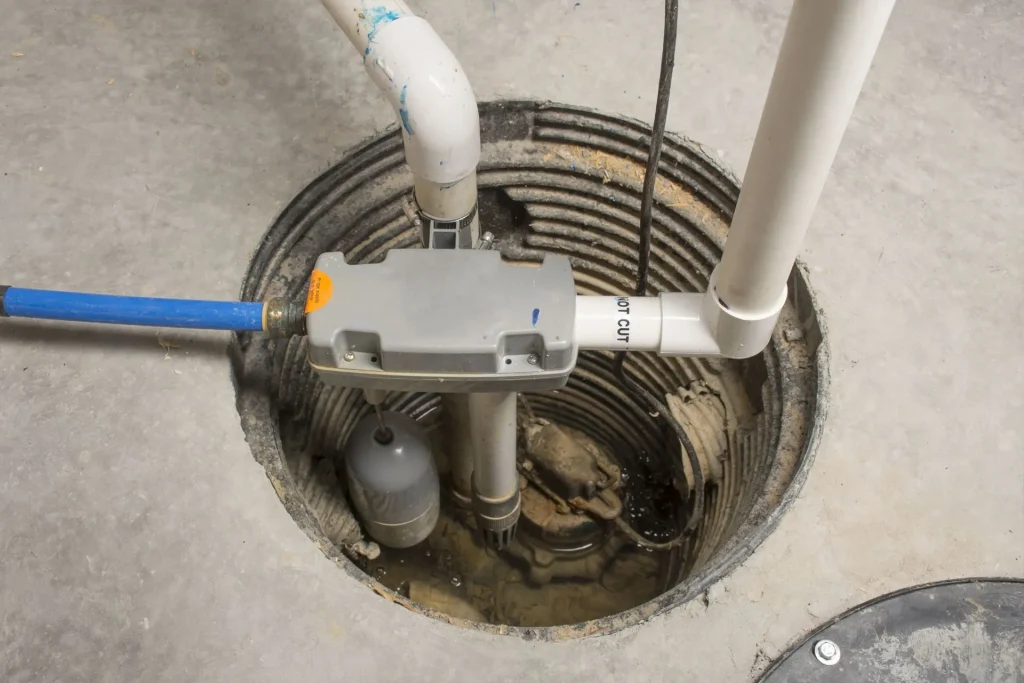
In a lot of New Jersey homes, the sump pump is what stands between a manageable moisture issue and a ruined basement after a storm. Yet many pumps sit ignored for years until the power goes out or the switch jams during the worst weather of the season.
A reliable sump system should be sized to the conditions, installed in a basin that collects water effectively, and discharged far enough from the home that the water does not cycle right back. It should also be tested. Pouring water into the pit to confirm activation is not complicated, but it gets skipped constantly.
Battery backup matters more than homeowners like to admit. Big storms and outages tend to arrive together. If the primary pump depends entirely on house power, that is a vulnerability. Water-powered backup systems exist too, though their suitability depends on municipal water supply conditions and local plumbing considerations.
The discharge line needs just as much attention as the pump itself. In winter, lines can freeze if they are poorly routed or not protected. Once frozen, the pump may continue running with nowhere for the water to go. That is how burnouts happen. A good installer thinks through those seasonal realities rather than just setting the basin and leaving.
Foundation cracks are not all emergencies, but none should be ignored
A crack in a basement wall tends to alarm homeowners instantly, and that reaction is understandable. The key is not to assume every crack means structural failure. Some are mostly shrinkage related. Some are active signs of movement. The location, direction, width, and behavior over time matter.
Vertical cracks in poured concrete are common and often repairable without major structural work, especially when they are narrow and stable. Horizontal cracks are more concerning because they can indicate pressure from outside soil. Stair-step cracks in block or masonry walls deserve careful review as well. If a crack is widening, leaking repeatedly, or accompanied by bowing or inward displacement, that moves the situation into structural territory.
This is where experience counts. A homeowner can take pictures and monitor crack width, but judgment about risk should come from someone who understands both waterproofing and foundation behavior. The wrong repair can hide a serious issue without actually solving it.
Humidity control is part of waterproofing, not an afterthought
A basement can stay technically free of leaks and still feel damp, smell musty, and support mold growth. That is because moisture problems do not always come from visible water intrusion. Basements are naturally cooler, and when warm humid summer air enters, it condenses on cool surfaces like ducts, pipes, and concrete walls.
That is why dehumidification belongs in the same conversation as drains and pumps. In many New Jersey basements, keeping relative humidity under control changes the whole environment. Wood stops swelling. Odors fade. Stored items last longer. Finished spaces feel livable instead of clammy.
Insulation choices matter too. Fiberglass batts installed directly against damp foundation walls often turn into a hidden mess. Moisture gets trapped, mold develops, and the insulation performs poorly. Rigid foam or other moisture-tolerant assemblies generally make more sense against below-grade walls, especially in finished basements. The details vary by wall type and local code, but the principle is simple: use materials that can tolerate the conditions of a basement, not just the conditions of a living room.
Smart upgrades for finished basements
Finished basements are always more vulnerable because the materials people love upstairs do not always perform well below grade. Carpet, standard baseboards, paper-faced drywall, and untreated wood trim can all suffer after even minor water events. One small leak can force a tear-out that costs far more than the original waterproofing.
If you are renovating a basement, it helps to think defensively. Keep vulnerable materials elevated where possible. Choose flooring that tolerates occasional moisture better than wall-to-wall carpet. Build access to key systems instead of burying every pipe and foundation seam behind permanent finishes. If a future repair requires opening a wall, the difference between a smart layout and a decorative but fragile one becomes obvious fast.
The best finished basements in wet climates are designed with maintenance in mind. They assume the basement is below grade and respect what that means.
Seasonal habits that make a real difference
A dry basement year-round usually comes from repeated small habits as much as from one major project. Homeowners who stay ahead of drainage issues tend to avoid the worst surprises.
Here are a few maintenance priorities worth keeping on the calendar:
- Clean gutters and confirm downspouts discharge well away from the foundation, especially before spring rains and after fall leaf drop.
- Check the sump pump and backup system at least a few times a year, and always before major storm seasons.
- Inspect basement walls, corners, and around windows for new staining, efflorescence, or crack changes.
- Keep the grade around the home from settling toward the foundation, particularly near porch edges and utility penetrations.
- Run a dehumidifier during humid months and monitor basement humidity rather than relying only on smell.
None of those tasks are expensive. Neglecting them often is.
When exterior excavation is worth it
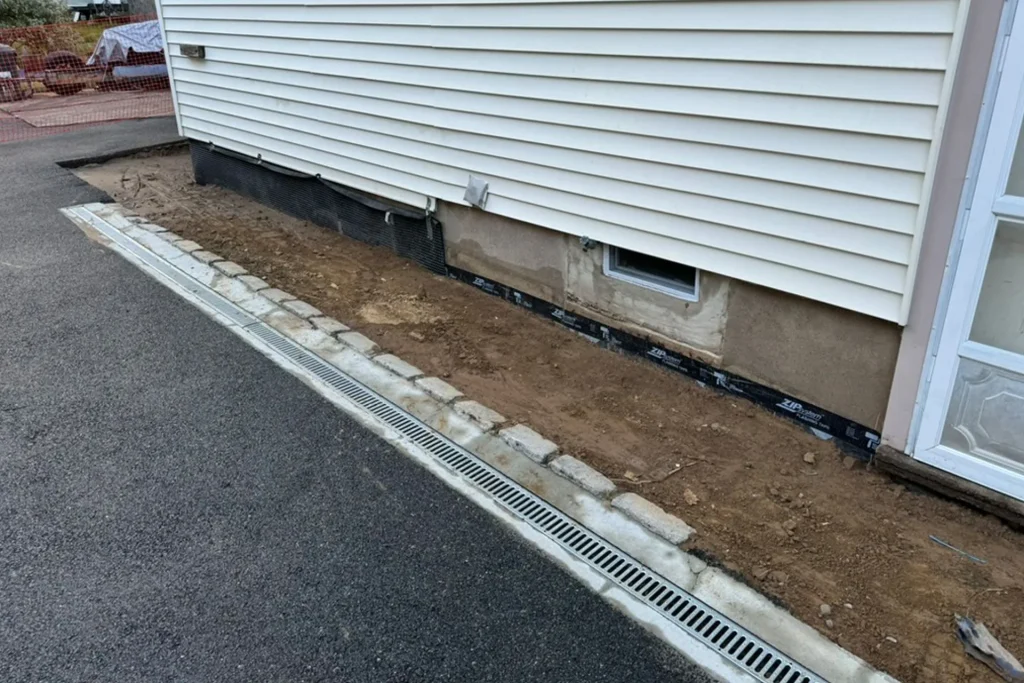
Some waterproofing jobs require digging outside the foundation. Homeowners usually hope to avoid that, and often they can. But there are times when exterior excavation is the right call. If a foundation wall has failed waterproofing on the outside, if there is a severe crack or wall penetration issue, or if below-grade water entry is chronic and localized to one section, accessing the wall from the exterior may be the most durable solution.
This kind of work is more disruptive and more expensive than interior methods. Landscaping may need to be disturbed. Walkways or patios can complicate access. But exterior repair allows the contractor to clean the wall, seal defects properly, apply true exterior waterproofing membranes, and improve footing drainage where necessary. That is a fundamentally different intervention from painting a wall on the inside and hoping for the best.
There is a trade-off, of course. On tight urban lots or homes with additions, excavation can be impractical. In those cases, a well-designed interior water management system may offer the best balance of performance and cost. The right choice depends on the house, not on a one-size-fits-all sales script.
Warning signs that call for a professional inspection
Some basement issues are manageable as maintenance projects. Others deserve a faster response because delay tends to raise both the risk and the eventual bill.
Pay close attention if you notice any of the following:
- water entering after nearly every hard rain
- horizontal cracking or visible wall bowing
- moldy odors that persist despite cleaning and dehumidification
- sump pump cycling constantly or failing to keep up
- repeated dampness in the same area despite attempted fixes
Those conditions do not always mean catastrophe, but they do mean the basement is asking for a proper diagnosis.
Choosing the right contractor without getting oversold
Waterproofing is one of those trades where homeowners can receive wildly different proposals for the same basement. One contractor recommends an interior drain and sump. Another suggests exterior excavation. A third wants to inject one crack and call it done. Sometimes one of them is clearly wrong. Sometimes all three are describing different pieces of the same problem.
Good contractors explain why water is entering, not just what they want to sell. They inspect outside as well as inside. They talk about soil, grade, discharge locations, and seasonal patterns. They distinguish between water management and structural repair. And they are careful with promises. No experienced pro should pretend a single bead of sealant will solve every wet basement forever.
Ask practical questions. What exactly is causing the water entry? What happens during a heavy multi-day rain versus a brief storm? If there is a pump, where does it discharge? What maintenance will the system require? If the basement is finished, what demolition is needed and how much access will future repairs require? Clear answers matter more than flashy brochures.
For homeowners shopping for Basement Waterproofing NJ services, local experience counts. New Jersey’s mix of housing stock, weather patterns, and soil conditions rewards contractors who have seen a lot of basements across different counties and know how those variables affect performance.
The cheapest fix is often the most expensive one later
There is a reason basement water problems keep coming back in some homes. The original repair addressed the visible symptom at the lowest possible cost, but not the actual water pathway. A little caulk around a window, a coat of “waterproof” paint, or a bargain sump with no backup may create a temporary sense of relief. It rarely creates lasting dryness if the bigger drainage picture remains untouched.
That does not mean every homeowner needs an elaborate full-perimeter system. Sometimes the answer really is simple. Extend the downspouts. Regrade one side yard. Clean out the window well. Seal a single crack. Add dehumidification. The point is matching the repair to the cause. That is what saves money over time.
A dry basement is usually the result of layers working together: sound drainage outside, controlled water movement inside, healthy humidity levels, and regular maintenance that catches changes early. When those layers are in place, the basement stops feeling like a gamble every time the forecast turns ugly.
For New Jersey homeowners, that peace of mind is worth pursuing. A basement should not be the room you avoid after a storm or the place that always smells a little off in August. With the right diagnosis and the right combination of fixes, it can stay dry through spring rains, summer humidity, fall storms, and winter freeze-thaw cycles alike. That is the real goal of Basement Waterproofing NJ, not a patch, not a slogan, but a basement that performs the way it should all year.
ARD Waterproofing
Address: 98 Smull Ave, West Caldwell, NJ 07006
Phone number: +12016465936
FAQ About Basement Waterproofing NJ
What is the best waterproofing method for a basement?
The best overall approach to waterproofing a basement is a combined exterior and interior system that stops water at the foundation wall and safely manages any moisture that gets through.
What is the average cost to waterproof a basement?
The average cost to waterproof a basement ranges from $2,500 to $15,000, with most homeowners paying around $5,200 for a complete project.
Can a basement be waterproofed from the inside?
Yes, a basement can be waterproofed from the inside, and it is often the most affordable and least disruptive method.